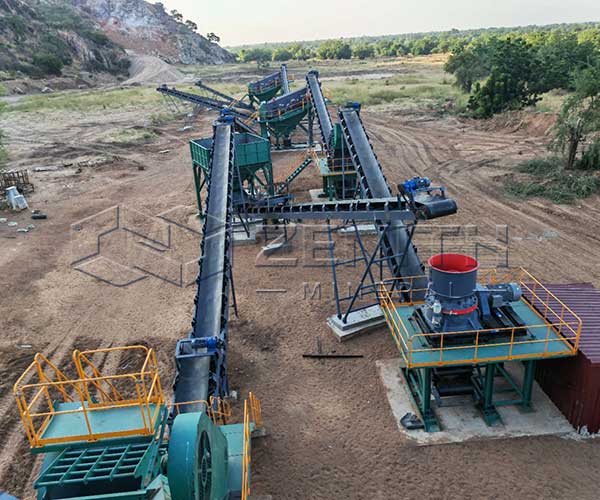
Understanding Ethiopia’s Limestone Resource Distribution
Ethiopia is rich in limestone resources distributed across regions such as Oromia, Amhara, Tigray, and Southern Nations. Knowing the geological distribution is essential before investing in a crushing plant.
Key points about Ethiopian limestone resources:
- High-quality limestone suitable for cement and construction is mostly found in Oromia and Amhara.
- Limestone deposits vary in calcium carbonate content and impurities, affecting crushing and processing efficiency.
- Some regions have surface limestone easily accessible, while others require deeper excavation.
- Understanding local geology helps in estimating extraction costs and plant placement.
A thorough study of resource locations, reserves, and quality ensures sustainable and profitable plant operations.
Critical Factors for Selecting Limestone Crushing Sites
The choice of a site directly impacts the efficiency and cost-effectiveness of a limestone crushing plant. Poor site selection can lead to higher operational costs and regulatory hurdles.
Important considerations for site selection include:
- Proximity to limestone quarries to minimize transportation costs.
- Access to main roads and highways for easy delivery of finished products.
- Distance from populated areas to comply with environmental regulations and reduce complaints.
- Availability of suitable land for plant installation and future expansion.
Selecting the right location ensures smoother logistics, lower operational costs, and better compliance with environmental and zoning regulations.
Choosing Appropriate Equipment for Limestone Crushing
Equipment selection is one of the most critical decisions in setting up a crushing plant. It affects production capacity, product quality, and operational efficiency.
Essential equipment for limestone crushing plants includes:
- Jaw crushers for primary crushing of large limestone rocks.
- Cone crushers and impact crushers for secondary and tertiary crushing.
- Vibrating feeders and conveyors to ensure smooth material flow.
- Screening equipment for classifying limestone into different sizes.
Choosing durable, high-capacity machinery ensures long-term productivity and reduces maintenance challenges. Local availability of spare parts and technical support should also be considered.
Efficient Process Flow Design for Limestone Plants
A properly designed process flow ensures high productivity and reduces energy consumption. Most limestone crushing plants operate in a multi-stage crushing process.
Typical process steps include:
- 1. Raw limestone extraction and feeding into the primary crusher.
- 2. Primary crushing to reduce large blocks into smaller pieces.
- 3. Secondary crushing to achieve required product size.
- 4. Screening and classification to separate fine and coarse particles.
- 5. Stockpiling or direct transport to cement plants, construction sites, or export facilities.
An optimized layout improves material handling, reduces downtime, and minimizes production bottlenecks.
Ensuring Reliable Energy and Water Supply for Operations
Reliable energy and water supply are essential for continuous limestone crushing operations in Ethiopia. Interruptions can cause significant downtime and financial loss.
Key infrastructure requirements include:
- Stable electrical power, preferably with backup generators.
- Water supply for dust suppression, cooling, and plant maintenance.
- Internal transport routes for movement of raw materials and finished products.
Many plants adopt hybrid energy solutions, combining grid electricity with diesel generators or solar-assisted systems to ensure uninterrupted operations.
Meeting Environmental Regulations and Compliance Requirements
Environmental regulations are strictly enforced in Ethiopia for mining and crushing operations. Compliance protects the environment and avoids legal penalties.
Core environmental measures include:
- Dust control systems such as water sprays, enclosures, and vacuum extraction.
- Noise reduction measures like machine insulation and sound barriers.
- Proper wastewater and runoff management to prevent contamination.
- Obtaining Environmental Impact Assessment (EIA) approvals before starting operations.
Estimating Costs for Limestone Plant Setup and Operations
Investment planning is crucial for the success of a limestone crushing plant. Costs vary depending on plant size, technology, and location.
Key cost components include:
- Land acquisition and quarry development.
- Machinery purchase and installation.
- Power, water, and infrastructure setup.
- Labor, maintenance, and spare parts.
- Regulatory compliance and environmental safeguards.
Accurate cost estimation, along with a feasibility study, ensures financial sustainability and helps attract potential investors.


 WhatsAPP 24h online service


 24h Online Chat


