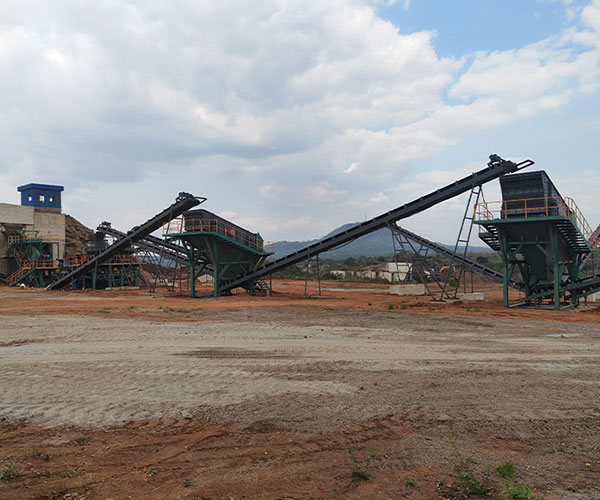
Ethiopia’s construction and infrastructure sectors have experienced rapid growth over the past decade. Roads, bridges, housing developments, and public works have created an unprecedented demand for aggregate materials such as gravel, sand, and crushed stone. These materials form the base for asphalt, concrete, and subgrade structures, making gravel crushing machines an essential part of Ethiopia’s industrial landscape.
Ethiopia’s major cities such as Addis Ababa, Bahir Dar, and Hawassa continue to expand, increasing demand for high-volume aggregates.
Government infrastructure projects, particularly those linked to the Growth and Transformation Plan, heavily rely on efficient crushing systems.
The evolution of gravel crushing machines in Ethiopia has been influenced by innovations in both design and manufacturing. Modern equipment integrates automated systems, advanced wear-resistant materials, and smart diagnostics for greater reliability and output efficiency.
Ethiopian gravel production relies on a mix of primary and secondary crushers, tailored to hard rocks like basalt and granite prevalent in regions around Addis Ababa and Gondar.
These machines form combo setups (jaw + cone) for optimal flow, as seen in Alibaba-sourced Ethiopian plants.
Technological upgrades are revolutionizing gravel production, from automated controls to hybrid mobile plants, addressing Ethiopia’s logistical hurdles.
Paragraph one: Zenith crushers integrate high-efficiency gyratory designs, lowering costs versus traditional methods; a 2025 limestone project delivered uniform particles with minimal fines.
Further, ISO-certified production lines for sand-gravel-stone combine coarse, medium, and fine stages, as in quarry setups featuring jaw-impact flows.
In Gondar quarries, quality assessments ensure aggregates meet road standards, with crushers tuned for 20-40 cm feeds to maximize durability.
Evaluating machine performance involves analyzing several key metrics that influence cost-effectiveness and production capacity. These indicators are essential for quarry operators seeking maximum output under Ethiopian field conditions.
Wear rate measurements: Ensuring longer lifespan of liners and hammers maintains consistent crushing levels and lowers maintenance costs.
Operators in Ethiopia commonly choose between stationary (fixed) and mobile crushing systems depending on project scale, mobility needs, and budget. Each type offers unique advantages in performance and operational flexibility.
Despite technological progress, Ethiopia’s crushing industry faces various challenges that impact performance and productivity. These include logistical, technical, and regulatory factors that limit growth potential.
Inconsistent electricity supply and high fuel costs can hinder sustained operations.
Shortage of skilled technicians affects equipment calibration and repair quality.
The importation of spare parts and replacement components often experiences delays due to customs and supply chain bottlenecks.
Limited access to financing for small quarry operators restricts investment in high-efficiency machinery.
Energy efficiency is one of the most critical concerns for Ethiopian gravel crushing operations, given the nation’s variable energy supply and costs. Efficient machines not only reduce electricity consumption but also minimize environmental impact.
Variable Frequency Drives (VFDs) allow crushers to adjust motor speed, lowering unnecessary energy use during light-load conditions.
New models feature optimized rotor designs and chamber geometry for improved crushing ratios and reduced energy loss.
Hybrid and diesel-electric crushing units are emerging as practical solutions for remote quarry sites where power grids are less accessible.
We have jaw crushers, impact crushers, cone crushers, sand makers and so on.
Mon - Sun, 0:00 - 24:00
24h Online Service
© Zenith. All Rights Reserved. Designed by


 WhatsAPP 24h online service


 24h Online Chat


