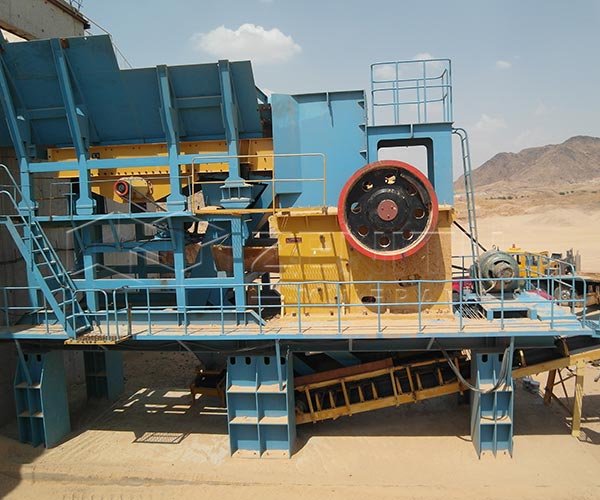
Exploring Jaw Crusher Fundamentals for Ethiopian Operations
Jaw crushers operate on a simple yet powerful principle:
A fixed jaw and a movable jaw compress materials against a stationary plate, reducing them to manageable sizes for further processing. Ideal for primary crushing in Ethiopia’s basalt, limestone, and granite quarries, these machines handle feed sizes up to 1,200 mm and output 50-1,000 tons per hour, depending on the model.
- Core Components: The frame, eccentric shaft, toggle plate, and flywheel ensure smooth operation; high-manganese steel jaws resist wear in abrasive Ethiopian rocks.
- Applications in Ethiopia: Widely used in gold mining regions like Oromia and construction sites in Addis Ababa, they prepare raw materials for concrete production and road base.
- Efficiency Metrics: Modern units achieve 80-90% reduction ratios, minimizing energy use—crucial amid Ethiopia’s variable power supply.
Beyond basics, understanding regional adaptations helps buyers avoid mismatches. For instance, dust suppression features are vital in Ethiopia’s dry highlands to comply with environmental standards.
Understanding Common Jaw Crusher Cost Ranges
Ethiopian buyers commonly encounter three broad price categories when shopping for jaw crushers. These price ranges vary depending on capacity, configuration, and whether the machine is new or used.
1. Small jaw crushers (5–20 TPH):
- Price range: Typically the most affordable.
- Suitable for small construction companies, small mining sites, and start-ups.
- Ideal for crushing basalt, limestone, and river stone at low volumes.
2. Medium jaw crushers (20–100 TPH):
- Price range: Moderate, depending on the build quality.
- Preferred by contractors, mid-size quarries, and concrete producers.
- Offers better productivity and more stable performance.
3. Large jaw crushers (100–350+ TPH):
- Price range: The highest among all categories.
- Built for large mining companies and high-volume aggregate producers.
- Includes stronger frames, bigger motors, and advanced automation.
4. Used / refurbished machines:
- More budget-friendly but require careful inspection.
- Ideal for buyers with lower capital investment capacity.
- Always check wear parts, maintenance history, and the authenticity of the refurbishment.
Diverse Types of Jaw Crushers Suited for Ethiopian Mining
Ethiopia’s diverse geology—from volcanic basalt in the Rift Valley to limestone in the north—demands versatile jaw crushers. Primary types include single-toggle for high throughput and double-toggle for finer control, with mobile options gaining traction for nomadic operations.
Here’s a breakdown of key variants:
- PE Jaw Crushers: Affordable ($8,000-$20,000) and simple, ideal for medium-hard rocks; produce 100-300 TPH in Ethiopian quarries.
- PEW Jaw Crushers: Robust for heavy-duty mining ($15,000-$40,000); excel in uniform crushing of granite, reducing secondary stage needs.
- Mobile Jaw Crushers: Wheel- or track-mounted ($30,000-$150,000), perfect for relocatable sites; integrate screens for on-site processing.
- Compact Jaw Crushers: Entry-level for small-scale ops ($5,000-$10,000); suited to artisanal gold miners in Tigray.
Hybrid models combining jaw and cone crushers, as in 120 TPH granite lines, optimize for Ethiopia’s export-oriented aggregates. Select based on feed size—ensure openings match quarry blasts to avoid jams.
Comparing Local vs Imported Crusher Machines
Ethiopia’s market includes both locally manufactured crushers and internationally imported models. Each option has its own strengths and trade-offs.
Local Machines:
- More affordable due to lower manufacturing and shipping costs.
- Faster delivery and easier access to spare parts.
- Suitable for small to medium operations that do not require advanced automation.
- Technical support is easily accessible, though some models may lack advanced features.
Imported Machines:
- Usually offer superior technology, longer life spans, and higher efficiency.
- Brands from China, Europe, and India dominate the import segment.
- Best for large-scale operations needing precision, automation, and high throughput.
- Higher upfront cost due to shipping, duties, and brand value.
Buyer Tip: Evaluate total cost of ownership—including fuel efficiency, spare parts availability, and maintenance costs—rather than just the purchase price.
Leading Suppliers and Sourcing Channels in Ethiopian Market
Sourcing jaw crushers in Ethiopia blends local distributors with international imports, primarily from China.
Prominent suppliers include:
Zenith China: Customizable stationary/mobile units ($10,000-$100,000); strong presence via Ethiopian agents for basalt plants.
Key Tips for Buying Jaw Crushers in Ethiopia
Before committing to a purchase, buyers should follow a structured evaluation process to avoid costly mistakes.
- Assess your production requirements: Estimate your daily or hourly output needs. Over-sizing the machine increases costs unnecessarily, while under-sizing reduces productivity.
- Request technical specifications: Ask for motor power, jaw plate material, crushing chamber design, and warranty terms.
- Check after-sales service availability: Ensure the supplier provides local support, spare parts, and fast response times for repairs.
- Visit actual sites: Inspect running machines at quarries or construction sites to evaluate real performance.
- Compare multiple quotations: Don’t rely on a single supplier. Compare at least three offers to understand market pricing.
- Consider installation and training: Ask whether the supplier offers setup support and operator training to reduce operational errors.
Maintenance Costs to Expect After Purchasing
While purchase price is important, maintenance expenses determine the long-term value of a jaw crusher. Buyers must plan for both routine and long-term maintenance.
- Wear parts replacement: Jaw plates, bearings, toggle plates, and belts are common consumables. High-manganese plates have longer lives but cost more.
- Lubrication and inspection: Regular greasing and motor checks are necessary to prevent breakdowns.
- Unexpected breakdowns: Poorly maintained machines face downtime that can be more expensive than parts themselves.
- Electrical and hydraulic repairs: Imported machines may require specialized technicians or parts, increasing costs.
- Annual maintenance budget: Setting aside 5–10% of the original machine cost per year helps maintain smooth operation.


 WhatsAPP 24h online service


 24h Online Chat


