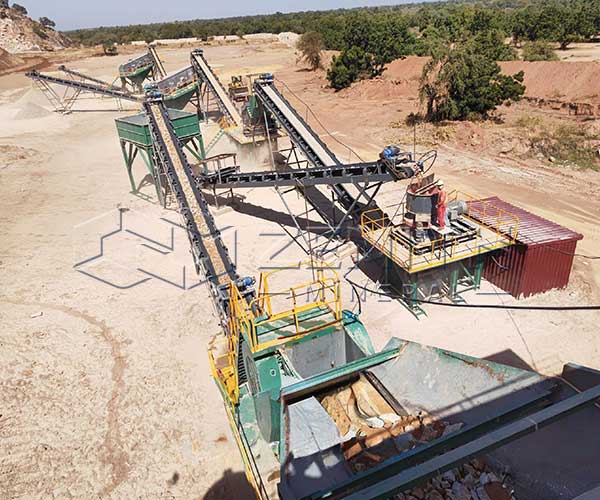
Limestone is one of Ethiopia’s most abundant natural resources. The country’s vast limestone deposits are crucial for both domestic and export markets, particularly in the cement industry, where it serves as a primary raw material. Establishing and operating limestone crushing plants has become essential to meet the growing demand for this vital mineral.
The Role of Limestone in Ethiopia’s Economy and Infrastructure Development
Limestone plays a vital role in Ethiopia’s economic development, particularly in the construction and cement industries. The demand for cement in the country has grown rapidly due to extensive infrastructure projects, urbanization, and a booming construction sector.
- Cement Industry Demand: The primary use of limestone is in the production of cement. Ethiopia’s construction sector has been expanding rapidly, necessitating an increased supply of cement. Limestone, being a key ingredient in cement production, is critical to meeting this demand.
- Raw Material for Other Industries: Beyond cement, limestone is also used in the production of lime, aggregates, and as a flux in steel manufacturing. This makes it a versatile and valuable resource for various sectors.
- Export Potential: Ethiopia has significant limestone reserves, which present a huge opportunity for export to international markets, especially in the Middle East and Africa.
Understanding the Limestone Crushing Process in Ethiopia’s Plants
Crushing limestone is the first step in the production of high-quality products, such as aggregates, powder, or cement. The process involves multiple stages to ensure the material is reduced to the right size and quality for its intended use.
- Extraction from the Quarry: The first step in the crushing process is extracting limestone from the quarry. This typically involves blasting, followed by the removal of overburden (soil and rock covering the limestone).
- Primary Crushing: The extracted limestone is first fed into a primary crusher (usually a jaw crusher) to reduce the size of large rocks to a manageable size.
- Secondary Crushing: The material is then passed through secondary crushers, such as cone crushers or impact crushers, to further reduce the particle size and shape it to meet specific requirements.
- Screening and Classification: After crushing, the material is screened to separate it into different size fractions, such as coarse aggregates, fine aggregates, and dust.
- Washing (if needed): In some cases, the crushed limestone is washed to remove impurities and ensure that the final product meets quality standards.
- Storage and Transport: The final products are stored in stockpiles or silos before being transported to their respective destinations, whether for use in cement production, construction, or export.
Essential Equipment Used in Limestone Crushing Plants in Ethiopia
The effective operation of a limestone crushing plant relies on the use of specialized equipment. These machines are designed to handle the hardness of limestone and efficiently produce the required output.
- Jaw Crushers: These are primary crushers used to break large limestone boulders into smaller, more manageable pieces. Jaw crushers are ideal for high-volume crushing operations and are durable for handling tough materials like limestone.
- Cone Crushers: Cone crushers are used in the secondary and tertiary stages of crushing. They are excellent for producing high-quality aggregates with a consistent particle size and shape.
- Impact Crushers: Used for secondary or tertiary crushing, impact crushers are known for their ability to produce cubical shapes, making them ideal for use in cement manufacturing and other construction applications.
- Hammer Crushers: These crushers use hammers to break down large pieces of limestone into smaller sizes. They are suitable for soft and medium-hard limestone and can process a wide range of material sizes.
- Vibrating Screens: After crushing, vibrating screens are used to classify the material according to size. They ensure that the final product meets the required specifications.
- Conveyor Systems: Conveyor belts are used to transport crushed limestone to different stages of the crushing process and to stockpiles for storage or transport.
- Wash Plants: In some cases, washing plants are employed to remove impurities such as clay, dust, or fine materials from the limestone.
Designing plant capacity, layout, and mobility for Ethiopia
- Capacity selection should be aligned with proven market demand; many Ethiopian aggregate and cement projects use plants in the 100–300 t/h range to balance investment cost and output.
- Layout design needs to consider site topography, haul road access, and proximity to end‑users so that power supply, water management, and truck circulation remain simple and economical.
- Stationary plants suit long‑life quarries close to cement factories, whereas mobile or semi‑mobile plants are attractive for road projects or scattered deposits where relocation is needed.
- Allowing space for future expansion, maintenance access, and environmental protection zones helps the plant adapt as Ethiopian regulations and market needs evolve.
Environmental, regulatory, and operational best practices
- Dust control with water sprays, enclosures, and bag filters reduces emissions near communities and helps plants comply with Ethiopian environmental and occupational health standards.
- Noise mitigation, safe blasting practices, and proper fencing protect workers and nearby residents, supporting smooth permitting and community acceptance.
- Preventive maintenance programs for crushers, screens, and conveyors minimize unplanned shutdowns and keep energy consumption per ton of limestone as low as possible.
- Training local operators and technicians on process control, safety, and equipment care builds long‑term operational resilience and supports industrial skills development in Ethiopia.


 WhatsAPP 24h online service


 24h Online Chat


