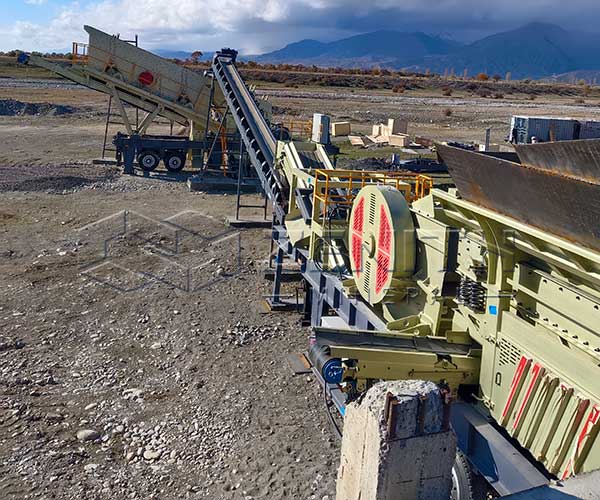
River stones are commonly composed of materials such as quartz, granite, basalt, sandstone, or other hard minerals that can withstand weathering and mechanical stress.
One of the most important features of river stone is its hardness. In many cases, river stone has high compressive strength and strong wear resistance, making it suitable for producing durable aggregates. The smooth and dense structure also reduces the amount of weak or flaky particles after crushing, which improves the quality of the final products.
River stone is widely used in crushing plants because it can be transformed into graded aggregates for construction. After crushing and screening, the material can meet strict standards required for concrete mixing, asphalt production, and base materials.
Another advantage is that river stones are often available locally, reducing transportation costs and ensuring a steady supply of raw material for aggregate producers.
The combination of hardness, durability, and availability makes river stone an ideal choice for crushing plants that need to produce consistent and high-strength construction materials.
A river stone crushing line follows a carefully planned process to convert large natural stones into usable finished products. The process usually consists of feeding, primary crushing, secondary crushing, screening, and material handling.
The process begins with raw river stones being delivered into a feeding hopper. The hopper stores the material temporarily and allows a steady supply into the system. A vibrating feeder installed below the hopper controls the feeding speed and ensures that stones enter the primary crusher evenly. This prevents overloading and improves the efficiency of the entire production line.
From the feeder, the stones enter the jaw crusher for primary crushing. The jaw crusher reduces large stones into medium-sized pieces by compressing them between a fixed jaw plate and a moving jaw plate. This first stage significantly reduces the size of the material and prepares it for further crushing.
After primary crushing, the material is transferred by belt conveyor to a secondary crusher. In most plants, a cone crusher is used because it is well suited for hard materials like river stone. The cone crusher further reduces the stone into smaller and more uniform sizes. In some smaller plants, a fine crusher may be used instead of a cone crusher depending on production needs.
The crushed material then moves to a vibrating screen. The screen separates the material into different size ranges according to project requirements. Finished products are discharged into separate stockpiles, while oversized stones are returned through belt conveyors to the secondary crusher for additional crushing.
Throughout the line, belt conveyors connect each machine and transport the material automatically. This reduces manual handling and ensures continuous operation.
Raw river stone is fed into the crusher, reduced in size through primary and secondary crushing, screened into finished products, and oversized material is returned for recrushing until the desired particle size is achieved.
A complete river stone crushing plant typically includes several key machines that work together as a system.
The feeding hopper receives the raw material from trucks or loaders and stores it before processing. It helps maintain a stable material supply.
The vibrating feeder transfers material from the hopper into the primary crusher at a controlled rate. It can also remove fine soil or unwanted particles before crushing.
The jaw crusher performs the first stage of size reduction. It handles large river stones efficiently and provides a reliable primary crushing solution.
The cone crusher is used for secondary crushing. It produces a finer and more uniform product while handling the hardness of river stone effectively.
The vibrating screen separates crushed stone into multiple sizes. It ensures accurate grading and allows oversized material to be recirculated.
Conveyors transport material between machines and to storage areas. They improve efficiency and reduce labor requirements.
The electrical control cabinet manages the operation of the entire plant. It allows operators to monitor performance and adjust settings easily.
A dust suppression system reduces airborne dust during crushing and screening. Water spray systems or dust collectors improve environmental compliance and workplace safety.
A river stone crushing line can produce several finished products in different size ranges. Each size has a specific application in construction and industrial projects.
This fine material is often used as manufactured sand. It can replace natural sand in concrete production, mortar mixing, and paving blocks. It is also used in pipe bedding and decorative landscaping.
Small gravel is commonly used in precast concrete, drainage layers, and asphalt mixtures. Its uniform size helps improve concrete strength and surface finish.
This is one of the most common aggregate sizes for ready-mix concrete. It is widely used in building foundations, structural concrete, and reinforced concrete components.
Larger crushed stone is suitable for road base layers, railway ballast, erosion control, and landscaping. It provides excellent stability and load-bearing performance.
Because the plant can produce multiple sizes simultaneously, operators can meet the needs of various customers while maximizing the value of the raw material.
River stone crushing plants offer several important advantages for aggregate producers and construction companies.
Modern crushing equipment provides continuous and reliable production. With proper design, the plant can maintain stable capacity even when processing hard materials.
The plant can produce different aggregate sizes by changing crusher settings and screen mesh configurations. This flexibility allows producers to meet changing market demands.
Automated feeding, crushing, screening, and conveying reduce labor requirements and improve overall productivity. Efficient circulation systems also minimize waste.
River stone produces strong and durable aggregates with excellent shape. This improves the quality of concrete and road materials.
Using locally available river stone reduces transportation costs and supports regional construction projects with a dependable source of aggregate.
Dust suppression systems and enclosed conveyors can reduce environmental impact, making the plant more suitable for modern production standards.
We have jaw crushers, impact crushers, cone crushers, sand makers and so on.
Mon - Sun, 0:00 - 24:00
24h Online Service
© Zenith. All Rights Reserved. Designed by


 WhatsAPP 24h online service


 24h Online Chat


