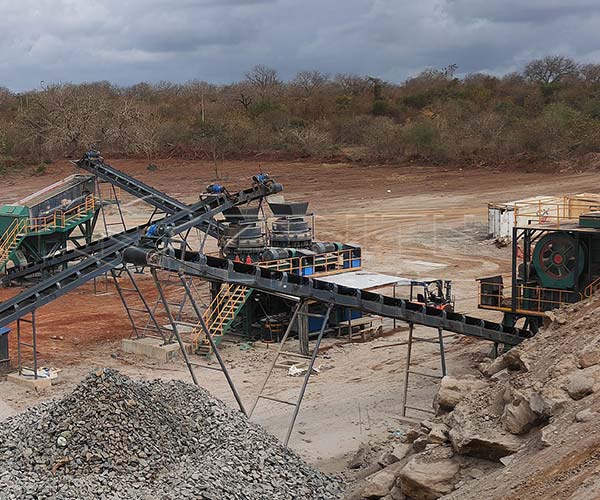
Why Granite Crushing Matters in Ethiopia
- Ethiopia’s mining and construction sectors need durable aggregate production for roads, housing, and industrial projects.
- Granite is a hard rock, so the best machines must handle high abrasion, steady feed, and heavy-duty operation.
- In practical African quarry setups, a jaw crusher is typically used for primary reduction, followed by a cone crusher for secondary crushing, while some plants use impact crushers when cubic shape is more important than wear economy.
For Ethiopian buyers, service support and spare parts availability matter as much as raw performance
Primary Jaw Crushers for Heavy Granite Duty
Jaw crushers are typically the first choice for primary crushing of granite in Ethiopia. They handle large feed sizes (up to 1,000-1,500 mm) and deliver high reduction ratios.
Advantages of jaw crushers:
- Simple structure and reliable operation.
- Excellent for hard, abrasive materials like granite.
- Lower initial cost compared to gyratory crushers.
- Proven performance in Ethiopian stone crushing plants.
Typical applications include:
- Primary quarry crushing
- Large granite boulder reduction
- Mining operations
- Aggregate production plants
A jaw crusher typically reduces granite from sizes exceeding 800 mm down to approximately 150–250 mm, preparing the material for secondary crushing stages.
Popular models include PE series from manufacturers like Zenith, suitable for 50-150 tph plants common in Ethiopian quarries.
Cone Crushers Deliver Superior Final Shapes
Cone crushers excel in secondary and tertiary stages for producing cubical aggregates from granite. They are widely recommended for Ethiopian conditions due to their ability to handle hard rock.
Benefits include:
- Consistent particle shape ideal for construction aggregates.
- Lower wear costs over time compared to impact crushers on abrasive materials.
- Hydraulic systems for easy setting adjustments.
- High capacity in medium to large plants (100-400 tph).
In Ethiopia, combinations like jaw + cone are standard for granite lines, such as 120 tph setups.
Common finished products include:
- 40 mm aggregates
- 20 mm aggregates
- 10 mm aggregates
- 5 mm stone chips
Modern hydraulic cone crushers also feature automatic overload protection, improving operational safety and reducing unexpected downtime.
Impact Crushers Improve Aggregate Quality
Assessing Impact Crushers Suitability for Ethiopian Aggregate Production Goals (52 characters)
Impact crushers are effective for producing high-quality, cubical shapes but are better suited for less abrasive materials or as secondary units. For pure granite, they may experience faster wear.
Pros:
- Excellent for shaping and fine crushing.
- High reduction ratio in a single stage.
- Good for recycling or mixed materials.
Ideal applications include:
- Premium concrete aggregates
- Asphalt production
- Manufactured sand
- Decorative stone aggregates
However, because granite is highly abrasive, impact crushers generally experience higher wear costs than cone crushers. Many granite processing plants use impact crushers only when superior aggregate shape justifies the additional maintenance expense.
Vertical Shaft Crushers Produce Better Sand
Vertical Shaft Impact (VSI) crushers play a major role in manufactured sand production.
Major benefits include:
- Excellent grain shape
- Uniform particle distribution
- High-quality manufactured sand
- Improved concrete performance
- Reduced flaky particles
As natural river sand becomes increasingly scarce, VSI crushers help Ethiopian producers manufacture high-quality artificial sand for modern construction projects.
Mobile Crushing Plants Increase Site Flexibility
Mobile crushers, including tire or crawler types, offer flexibility for Ethiopian mining where quarries may relocate or lack fixed infrastructure. Brands like those from Zenith provide portable solutions.
Key features:
- Quick setup and relocation.
- Integrated feeding, crushing, and screening.
- Diesel or electric options for power-challenged areas.
- Suitable for smaller to medium operations.
Mobile plants are particularly suitable for:
- Temporary quarry sites
- Remote mining projects
- Road construction
- Infrastructure development
- Government construction contracts
For companies operating in multiple quarry locations throughout Ethiopia, mobile crushing equipment can significantly reduce logistics expenses.
Vibrating Screens Ensure Accurate Sizing
Screening equipment separates crushed granite into different size fractions for various construction applications.
Common aggregate sizes include:
- 0–5 mm manufactured sand
- 5–10 mm aggregates
- 10–20 mm aggregates
- 20–40 mm aggregates
- Oversized materials for recirculation
High-quality vibrating screens improve product consistency while maximizing plant productivity.
Recommended Granite Crushing Setups
- For small to medium quarry projects, a setup with vibrating feeder, jaw crusher, cone crusher, and vibrating screen is often the most balanced solution for hard granite.
- For around 100 to 200 tph projects, examples from African granite projects commonly use jaw-plus-cone or jaw-plus-impact configurations with screening and conveyors.
- If the target product is road base or construction aggregate, a jaw crusher plus cone crusher line is usually the safest long-term choice for granite.
- If the goal is more cubical final aggregate, a jaw crusher plus impact crusher line may be considered, but operating costs can be higher because granite is abrasive.
Choosing Equipment Based on Plant Capacity
Production requirements largely determine equipment selection.
Small-scale operations may require:
- Compact jaw crushers
- Small cone crushers
- Portable screening units
Medium-scale plants typically use:
- Larger jaw crushers
- Hydraulic cone crushers
- Multiple vibrating screens
Large industrial operations often invest in:
- Heavy-duty jaw crushers
- Multi-cylinder cone crushers
- VSI crushers
- Fully automated screening systems
- Complete stationary crushing plants
Matching machine capacity with production targets prevents unnecessary investment while ensuring efficient operations.


 WhatsAPP 24h online service


 24h Online Chat


